

dti Publishing Corporation Announces NetEmulator® 2.0, the Cybersecurity Edition
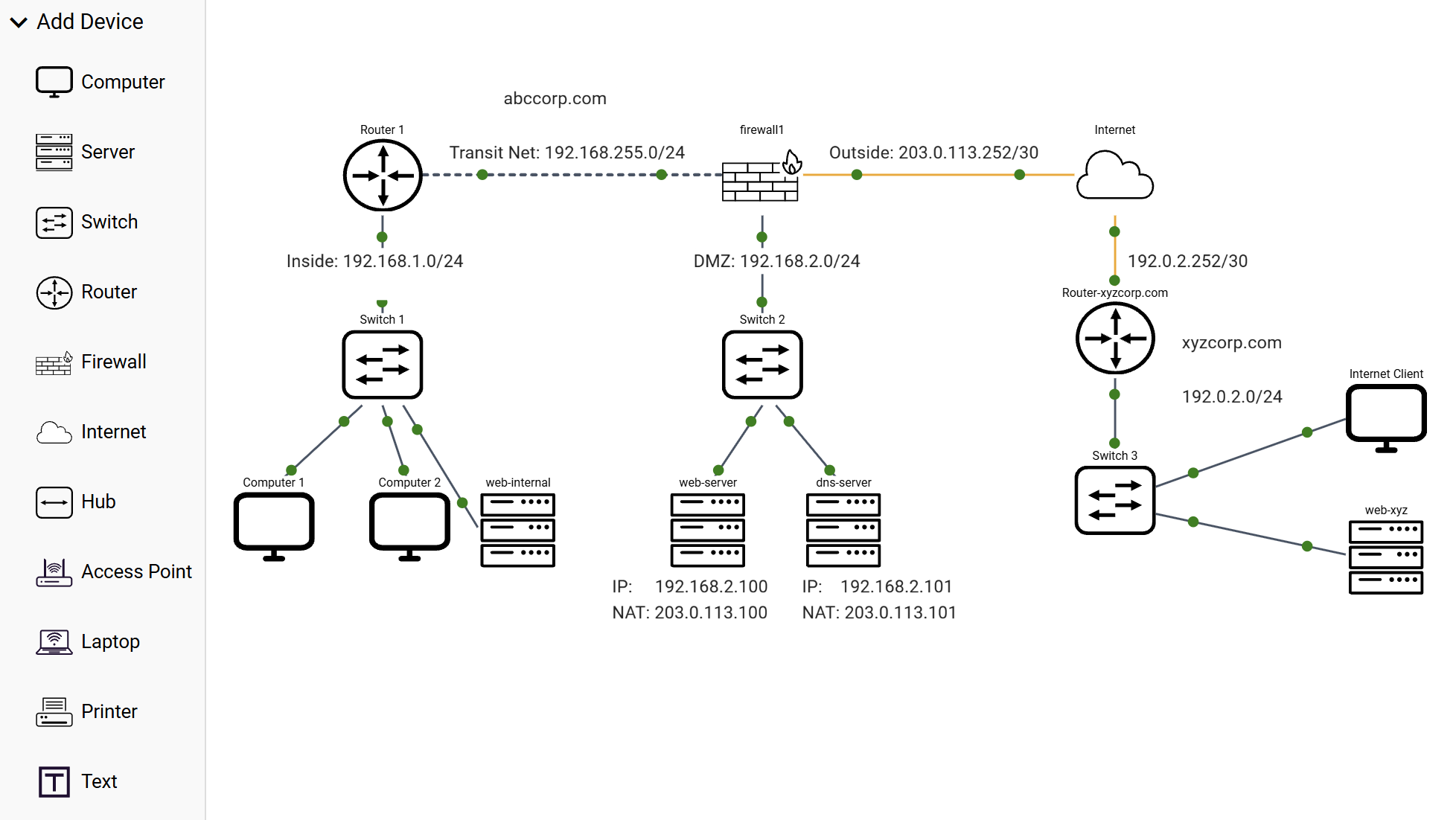
The Cybersecurity Edition transforms network security concepts into observable, hands-on practice inside the NetEmulator® learning environment.
NetEmulator 2.0 allows students to understand cybersecurity as a sequence of observable decisions and outcomes rather than as a disconnected set of terms.
The announcement follows recent recognition from Education Technology Insights, which awarded NetEmulator® the 2026 Innovation in Education Award. In connection with the recognition, Tina Rosen, Managing Editor of Education Technology Insights, said, “By making technical education more accessible, intuitive, and effective, the company is setting a new benchmark for how students develop real-world skills in the digital age.”
NetEmulator 3.0 builds on the platform’s core purpose: helping learners develop practical networking skills through hands-on configuration, observation, testing, and validation. With the Cybersecurity Edition, dti Publishing extends that model into firewall configuration, secure access control, attack-surface reduction, vulnerability testing, intrusion detection, logging, and exploit awareness.
“Cybersecurity education cannot be limited to definitions, diagrams, and multiple-choice questions,” said Pierre Askmo, founder and CEO of dti Publishing Corporation. “Students need to see what happens when a service is exposed, when a firewall rule is misconfigured, when traffic is denied, when a scan detects open ports, and when a security policy successfully protects a network. NetEmulator 3.0 was created to make those experiences visible, measurable, and teachable.”
The Cybersecurity Edition introduces a robust firewall model supporting both stateless and stateful traffic filtering. Learners can create zone-based rules, control traffic between internal networks, DMZ segments, and external networks, and observe how traffic is permitted or denied based on source, destination, protocol, port, and direction. The firewall capabilities also include Network Address Translation, or NAT, helping students understand how private networks communicate externally and how public-facing services can be published securely.
NetEmulator 3.0 also adds IDS/IPS capabilities, giving instructors a practical way to teach intrusion detection and prevention. Students can review alerts, examine logs, and connect suspicious behavior to actual network activity. Logging is a key part of the release, allowing learners to analyze allowed and denied traffic, verify firewall behavior, and understand why monitoring is essential to cybersecurity operations.
The release expands defense-in-depth capabilities inside the network. New host firewall functionality, extended ACLs, and the ability to turn web services on or off allow students to reduce unnecessary exposure and secure systems at multiple layers. These features support labs focused on least privilege, endpoint hardening, secure administration, and service control. Students can observe how unnecessary services increase risk and how layered controls reduce the impact of a single misconfiguration.
NetEmulator 3.0 includes important service, protocol, and testing capabilities such as DNS, DHCP, web server and web client functionality, a packet generator, Telnet, SSH, Nmap, vulnerability testing, and exploit simulation. These features allow students to test networks from both the administrator’s and attacker’s perspectives. They can scan for open ports, compare insecure Telnet with secure SSH, identify reachable services, generate traffic, test vulnerabilities, and validate that security controls are working as intended.
A new Internet cloud representation gives lab designers and instructors a clearer way to model untrusted external networks. Combined with firewall zones, NAT, DMZ design, IDS/IPS, logging, Nmap, and exploit testing, the Internet cloud supports realistic scenarios such as protecting a public web server while preventing outside access to internal systems.
The goal of NetEmulator 3.0 is not simply to add more features. It is to create a more complete cybersecurity learning environment where students can configure controls, test outcomes, review evidence, identify weaknesses, and correct mistakes. This approach helps learners understand cybersecurity as observable, testable behavior rather than as a disconnected set of terms.
Because NetEmulator runs in the browser, schools can deliver cybersecurity labs without requiring students to install large software packages or maintain complex local virtual machines. The platform is designed for online, hybrid, and classroom environments, giving instructors a consistent way to assign, assess, and support practical work.
With NetEmulator 3.0, dti Publishing Corporation continues its commitment to skills-based technical education. The Cybersecurity Edition gives educators a powerful new way to teach network defense, secure configuration, vulnerability testing, monitoring, and operational validation in one integrated environment.
Anne-Marie Suckley
dti Publishing Corp.
email us here
Visit us on social media:
LinkedIn
YouTube
Legal Disclaimer:
EIN Presswire provides this news content "as is" without warranty of any kind. We do not accept any responsibility or liability for the accuracy, content, images, videos, licenses, completeness, legality, or reliability of the information contained in this article. If you have any complaints or copyright issues related to this article, kindly contact the author above.
